
Search Florida Criminal Records
Florida criminal records are public documents you can search online or in person. The state has several agencies that keep these records. The Florida Department of Law Enforcement runs the main criminal history database. The Department of Corrections tracks inmates and offenders. Each county clerk keeps court records for local cases. You can search these Florida criminal records using name-based searches, case numbers, or inmate IDs. This guide shows you how to find arrest records, court cases, and conviction data across all 67 counties in Florida.
Florida Criminal Records Quick Facts
Florida Department of Law Enforcement Criminal Records
The Florida Department of Law Enforcement keeps the state's main criminal history database. FDLE collects records from police departments, sheriff offices, and courts across Florida. Their database has felony and misdemeanor arrests from all 67 counties. You can search these Florida criminal records online through the CCHInet portal. The system gives instant results for most name-based searches.
You can access the FDLE Criminal History Search Portal from any computer. You need the person's full name and date of birth to start. Adding a middle name or Social Security Number helps find the right person. The search costs $24 plus a $1 processing fee. Results show right after you pay. You will see either a single record, a list of possible matches, or a no record found message.
The FDLE database includes arrests, charges, and case outcomes from Florida. It does not include federal crimes or arrests from other states. Sealed and expunged records do not appear in public searches. The data comes from fingerprint-based arrests reported to FDLE. Local police must send arrest records within 24 hours. This keeps the Florida criminal records database current.
Visit the FDLE Criminal History Records page for more details. You can also call FDLE at (850) 410-8161 with questions. The Applicant Services Unit helps with background checks for jobs and licenses. They can be reached at (850) 410-7000. FDLE headquarters is at 2331 Phillips Road, Tallahassee, FL 32308.
You can view the FDLE online search system to begin your criminal records search in Florida.
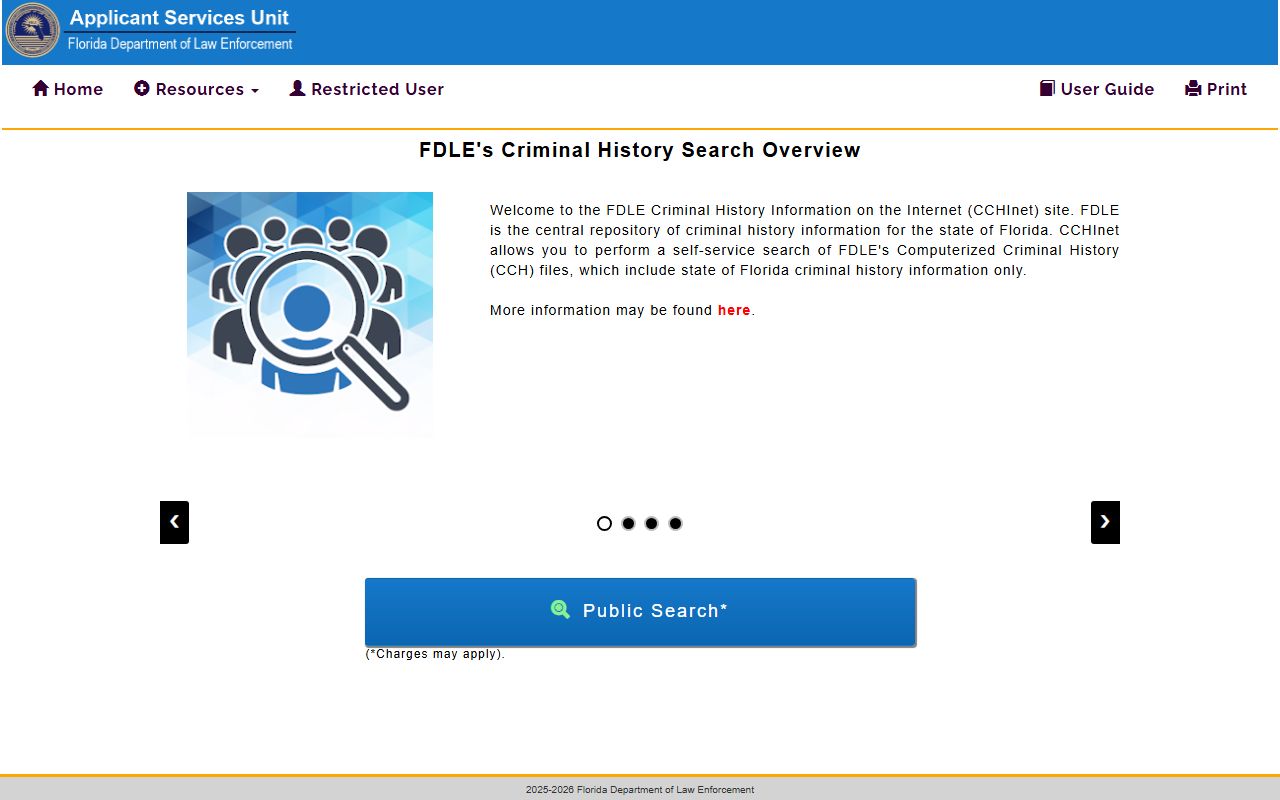
This portal lets you search the Computerized Criminal History files from Florida. You can run a name-based search from home. Results show charges, arrests, and dispositions in Florida. The system works 24 hours a day.
Florida Department of Corrections Inmate Records
The Florida Department of Corrections runs the state prison system. They keep records on all inmates in state custody. You can search these Florida criminal records for free online. The offender database has current inmates, released inmates, and those under supervision. It covers felony offenders sentenced to state prison only.
Use the DOC Offender Search to find inmate information. You can search by name or DC number. The system shows photos, crimes, sentence length, and release dates. Data updates weekly for most information. Release dates and location changes update nightly. This gives you current Florida criminal records for state inmates.
The database has five main search options. The Inmate Population search shows current prisoners. The Inmate Release search shows those who got out since 1990. The Escape search lists inmates who ran away and were not caught within 15 days. The Absconder search shows wanted offenders. The Supervised Population search covers those on probation or parole. All these help you find Florida criminal records on state offenders.
These Florida criminal records show felony convictions only. They include murder, robbery, and drug crimes. The records show sentence length and release dates. You can also see if an inmate escaped or violated parole. This Florida criminal history data helps victims and families track offenders.
Note: The DOC database does not include county jail inmates or those on county probation in Florida.
Visit the Florida Department of Corrections website for more tools. The Custodian of Public Records is James Best. His office is at 501 S. Calhoun Street, Tallahassee, FL 32399. You can call 850-717-9774 or fax 850-488-4534 for records requests.
Access the DOC Offender Search database to look up Florida inmate records.
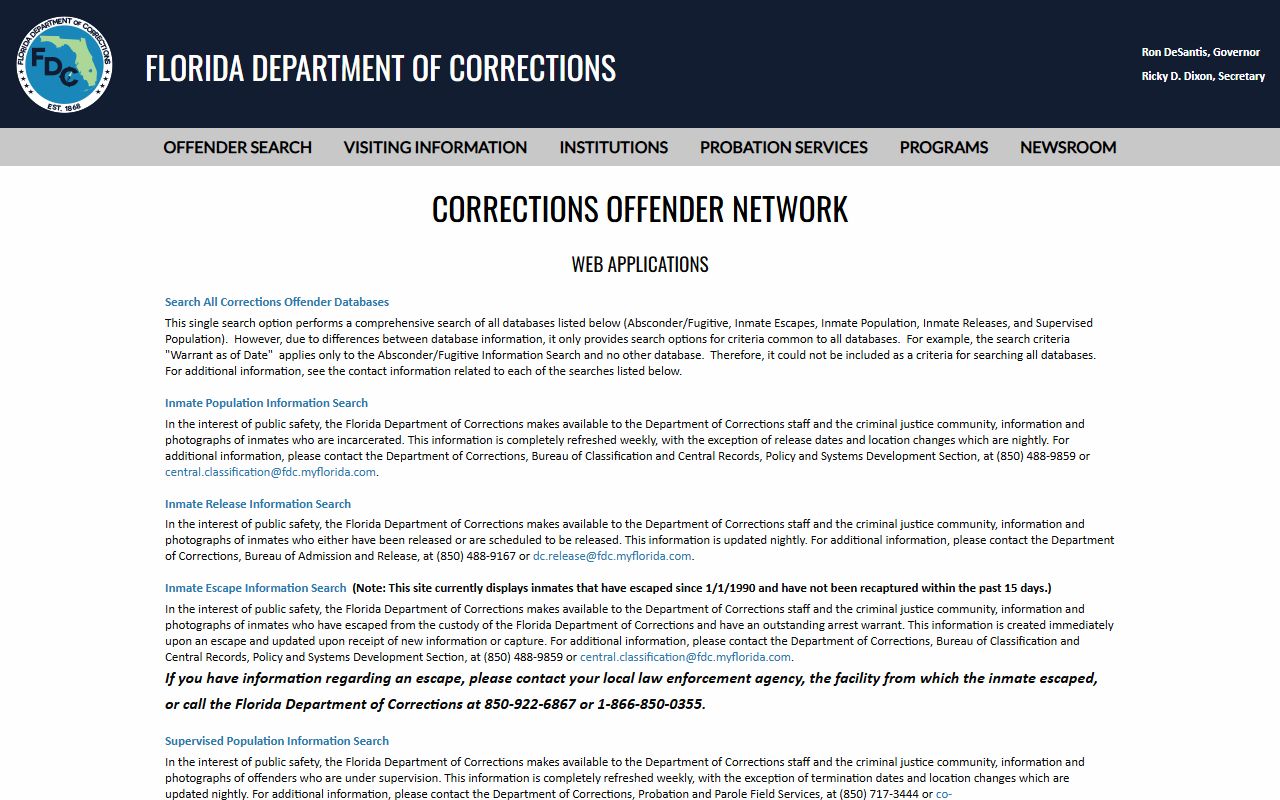
This search tool covers all state prisons in Florida. You can find current and past inmates. The system gives mugshots and case details. It is free to use.
Florida Courts Criminal Case Records
Florida has a unified court system with 20 circuit courts. These courts handle all felony criminal cases in the state. Each county has a Clerk of Court who keeps the records. You can search Florida criminal court records online in many counties. Some clerks have their own search portals. Others use statewide systems.
The Florida Courts website has tools for finding cases. The ACIS system lets you search appeals cases. This covers the Supreme Court and District Courts of Appeal. For trial court records, you must use each county's system. The Florida Court Clerks and Comptrollers association helps connect you to local clerks. Visit flclerks.com to find your county clerk.
Court records show the full history of a criminal case in Florida. You can see the charges filed, court dates, and final outcomes. These records include motions, hearings, and sentencing details. Most clerks charge fees for copies. Certified copies cost more than plain ones. Some clerks offer free basic searches but charge for documents.
You can explore the Florida Courts homepage for more information on accessing court records.
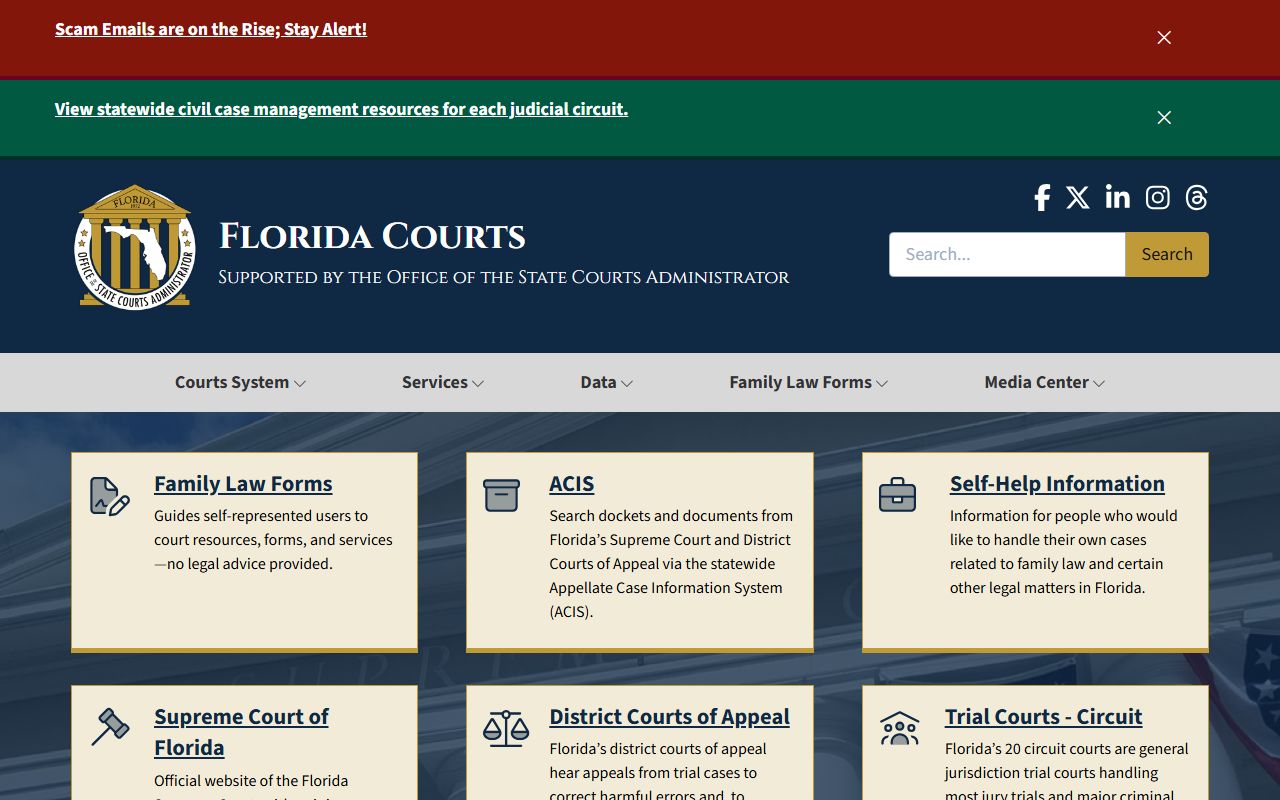
The state court system handles all felony cases in Florida. You can find appellate and trial court information. Each circuit court serves multiple counties. Clerks keep all case files and dockets.
Note: Court record fees and access rules vary by county in Florida.
Florida County Criminal Records
Each Florida county keeps local criminal records. These records come from arrests by county sheriffs and city police. They also include court cases from that county. You can search these records at the clerk of court office. Many Florida counties offer online search tools for criminal cases.
County sheriff offices maintain arrest records and jail bookings. These records show who was arrested and when. They include mugshots and charges filed. Most Florida sheriff websites have inmate search features. You can search by name to find recent arrests. These criminal records are updated daily in most counties.
The county clerk keeps all court documents. This includes criminal complaints and trial records. You can request copies of any public court file. Some clerks charge fees for searches and copies. Florida counties must follow state public records laws. This means most criminal records are open to view.
Seal and Expunge Florida Criminal Records
Florida law lets some people seal or expunge their criminal records. This process hides or removes records from public view. The FDLE Seal and Expunge Process page has full details. You must first get a Certificate of Eligibility from FDLE. Then you petition the court in the county where the case happened.
There are seven types of relief in Florida. Administrative Expungement is for arrests made by mistake. Court-Ordered Sealing or Expungement requires the certificate first. Juvenile Diversion Expungement is for teens who finished certain programs. Lawful Self-Defense Expungement applies when the state attorney certifies self-defense. Human Trafficking Expungement helps victims of trafficking. Automatic Juvenile Expungement happens at age 21 or 26. Early Juvenile Expungement is for ages 18 to 21 under special rules.
Under Section 943.0585, you can expunge a record if charges were dropped or you were found not guilty. You must never have been convicted of a crime. The certificate costs $75 and is good for 12 months. Processing takes about 12 weeks. You can call FDLE at (850) 410-7870 for help.
Learn more about the FDLE seal and expunge process to clear your Florida criminal record.
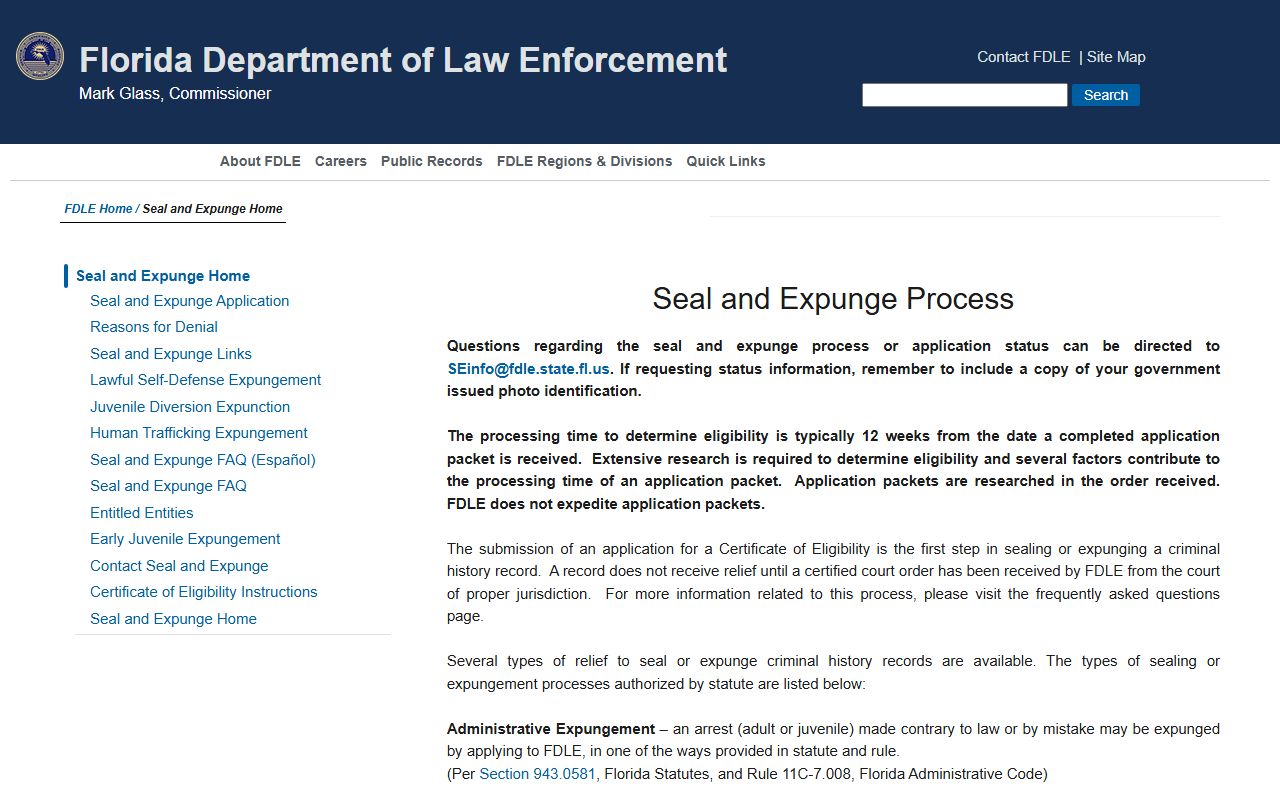
This page explains how to hide or remove Florida arrests from public view. You need a Certificate of Eligibility first. Then you file with the court.
Florida Criminal Records Laws and Statutes
Florida laws control who can see criminal records and how they are shared. Section 119.07 is the Florida Sunshine Law. It says all state and local records are open to the public. This includes most Florida criminal records held by government agencies.
Section 943.053 deals with criminal history information. It says these records are open during business hours. FDLE keeps the central repository for the state. Some records are not public. Active investigations, sealed records, and juvenile records stay private. Victim names are also protected.
Section 943.0595 created automatic sealing in 2019. FDLE now seals some records without a court petition. This applies when charges are dropped or the person is found not guilty. It does not cover forcible felonies or sex crimes. The process is not retroactive. It only helps cases after October 1, 2019.
Section 943.045 defines key terms. Expunction means physical destruction of a record. Sealing means the record stays but is hidden from public view. Criminal history information is data collected by police and courts on individuals. These definitions guide how Florida handles criminal records.
Types of Florida Criminal Records Available
Florida maintains several types of criminal records. Each type serves a different purpose. Understanding these types helps you find the right records for your needs. Arrest records show when police took someone into custody. These records come from local police departments and sheriff offices across Florida.
Court records document the full legal process. They include charges, hearings, and final judgments. Florida court records are public under state law. You can get these from the clerk of court in each county. Criminal history records combine data from arrests and courts. FDLE maintains the central database of these records. Background checks use this data to show a person's complete criminal past.
Inmate records track people in state prison. The Florida Department of Corrections keeps these files. They include photos, crimes, sentences, and release dates. Probation and parole records show supervised offenders. Warrant records list wanted persons. These Florida criminal records help law enforcement and the public stay informed.
How to Search Florida Criminal Records
You have several ways to find criminal records in Florida. Each method has pros and cons. The best choice depends on what you need and how fast you need it.
For statewide records, use the FDLE CCHInet portal. This is the most complete database of Florida arrests. It costs $25 per search. Results come back right away. You can search from home at any time. This is best for background checks and personal searches.
For state prison inmates, use the DOC Offender Search. This is free and covers all felony inmates. You get photos, crimes, and release dates. It does not include county jail inmates. Data updates weekly for most fields.
For court cases, contact the county clerk where the case was filed. Many clerks have online search tools. Some charge fees for searches or copies. You can also visit in person during business hours. This is best for getting certified copies of court records.
For local arrests, check with the county sheriff. Many sheriffs have online inmate searches. These show recent arrests and jail bookings. Some include mugshots and charges. This is best for finding recent arrest records in Florida.
Florida Public Records Access for Criminal Data
Florida law gives everyone the right to view criminal records. The Florida Sunshine Law makes government records open. This includes arrest records, court records, and inmate records. You do not need to give a reason for your request. You do not need to be a Florida resident to search these records.
Agencies can charge fees for copies of criminal records. They can also charge for staff time on large requests. But they must let you view records for free. You can inspect most Florida criminal records in person. Many records are also online for instant access. This open access helps keep government accountable.
Some criminal records are not public in Florida. Juvenile records stay sealed in most cases. Active police investigations are also private. Records that have been expunged cannot be viewed. Victim information is protected by law. These limits balance public access with privacy rights.
Note: You can appeal if an agency denies your request for Florida criminal records.
Florida Background Checks and Criminal History
Background checks use Florida criminal records to show a person's history. Employers often run these checks on job applicants. Licensing agencies review criminal history for professional licenses. Volunteer groups check records to protect children and seniors. These background checks search Florida arrest records and court convictions.
The FDLE provides official background checks for a fee. These criminal history reports show statewide arrests. They include felony and misdemeanor charges from Florida. The reports show case outcomes and dispositions. Some records may not appear if they were sealed or expunged. Out-of-state crimes do not show in Florida criminal records.
Many Florida counties offer local background check services. These search criminal records in that county only. They cover arrest records from the local sheriff. They also search court records for that area. These local checks cost less than statewide searches. But they may miss crimes from other Florida counties.
Background checks help make informed decisions. They reveal criminal records that may affect safety or trust. Florida law controls how these records can be used. Some crimes cannot be used to deny housing or jobs after a certain time. The Fair Credit Reporting Act also applies to background checks in Florida.
Florida Arrest Records and Police Reports
Arrest records in Florida document when police take someone into custody. These records come from city police departments and county sheriff offices. They show the date, time, and location of the arrest. Arrest records include the charges filed and the arresting agency. You can search these records at police stations or online.
Police reports provide details about criminal incidents. They include witness statements and evidence collected. These reports form the basis of court cases in Florida. Police records often include photos and fingerprints. You can request copies of police reports from the agency that made the arrest. Some Florida police departments charge fees for these records.
Booking records show who is in county jail. These inmate records include mugshots and personal details. They list the criminal charges and bail amounts. Most Florida sheriffs provide online inmate search tools. These arrest records update several times per day. You can search by name to find current detainees.
Arrest records do not mean someone was convicted. They only show that police made an arrest. The court records will show the final outcome. Cases may be dropped or result in acquittal. Always check court records to see the full criminal case history in Florida.
Florida Court Case Records and Dockets
Court case records in Florida document the full legal process. These records start when charges are filed. They continue through trial and sentencing. Court records include motions filed by lawyers. They also have hearing dates and judge rulings. You can access these criminal case files at the clerk of court office.
Dockets list all events in a criminal case. They show when hearings happened and what was decided. Court dockets track the progress of felony and misdemeanor cases. These public records help lawyers and families follow cases. You can search court dockets online in many Florida counties. Some systems charge fees for detailed case records.
Florida circuit courts handle all felony criminal cases. County courts deal with misdemeanors. Each court keeps separate criminal records. The clerk of court manages these files. You can request copies of indictments and plea agreements. Sentencing records show penalties imposed by judges.
Court records prove what happened in a criminal case. They show convictions and acquittals. These records are used for background checks and appeals. Florida courts maintain these files permanently. Older cases may be stored off-site or on microfilm.
Florida Warrant Records and Wanted Persons
Warrant records in Florida show when judges order an arrest. These records come from courts across the state. They include bench warrants and arrest warrants. Florida warrant records are part of the criminal justice system. Law enforcement uses them to find wanted persons.
You can search for active warrants in Florida databases. Some counties list warrants on their sheriff websites. These warrant records show the charges and issue date. They help identify people avoiding court. Florida warrant searches protect public safety. They let people know if someone is wanted by police.
The FDLE maintains a wanted persons database. This combines warrant records from across Florida. It includes felony and misdemeanor warrants. You can search by name or location. These criminal records help track fugitives. They also aid in background checks for employment.
Florida Criminal Records FAQ
People often have questions about criminal records in Florida. Here are answers to common questions about arrest records, court records, and background checks.
Are Florida criminal records public? Yes, most criminal records are public in Florida. Arrest records, court records, and conviction data are open. You can search these records online or in person. Some records like juvenile files stay sealed.
How long do criminal records last in Florida? Criminal records remain on file permanently in Florida. Arrest records stay even if charges are dropped. Only expungement removes records completely. Sealing hides records from public view but they still exist.
Can I search Florida criminal records for free? Some Florida criminal records searches are free. The DOC inmate search costs nothing. Many county court records searches are free for basic data. FDLE charges $25 for statewide criminal history reports.
What shows up on a Florida background check? Background checks show arrest records and convictions. They include court cases from Florida courts. Pending charges may also appear. Sealed or expunged records do not show on standard checks.
How do I get a copy of my Florida criminal record? You can request your own criminal records from FDLE. This requires fingerprints and a fee. You can also search court records in counties where you had cases. Inmate records are available through the DOC if you were in state prison.
Do Florida arrest records show convictions? Arrest records only show that police made an arrest. They do not prove guilt. Court records show whether a case resulted in conviction. Always check both arrest records and court outcomes.
Florida Online Criminal Records Search Tools
The internet makes it easy to search criminal records in Florida. Many agencies offer free online databases. These tools save time compared to visiting offices. You can search arrest records from home. Court records are available through clerk websites. Inmate records update daily online.
FDLE provides the main statewide criminal history search. This database contains fingerprint-based arrest records. It covers all Florida counties. The online system gives instant results. You pay $25 per criminal records search. Results show felonies and misdemeanors.
County clerk websites offer local court record searches. These systems let you look up criminal cases by name. You can view dockets and scheduled hearings. Some clerks charge for document images. Basic case information is often free. These court records help track case progress.
Sheriff office websites have arrest and inmate search tools. You can find recent bookings in county jails. These arrest records include photos and charges. Most systems update several times daily. You can search by name or booking date. This helps families find detained loved ones.
The DOC offender search tracks state prisoners. This free tool shows felony inmate records. You can find current and released offenders. Records include crimes and release dates. The system covers all Florida state prisons. Data refreshes weekly for most fields.
Florida Probation Records and Parole Supervision
Probation records in Florida track offenders under community supervision. These criminal records show sentencing details. They include conditions that offenders must follow. The Department of Corrections maintains these files. You can search for supervised offenders online.
Parole records document early release from prison. Florida has limited parole for older sentences. Most inmates serve at least 85 percent of sentences. Parole records show release dates and supervision terms. These criminal records help track former prisoners. They ensure public safety through monitoring.
Supervision records include drug testing and check-ins. They track whether offenders follow court orders. Violations of probation can result in arrest. These records show compliance with sentencing. Florida probation officers file regular reports. The criminal records system tracks all contacts.
You can search for supervised offenders in DOC databases. These records show current status and location. They include the original criminal charges. Sentencing records display the length of supervision. This helps victims and families stay informed about offenders.
Florida Juvenile Records and Youth Offender Data
Juvenile records in Florida involve offenders under 18. These records differ from adult criminal records. They focus on rehabilitation rather than punishment. Florida law protects juvenile records from public view. Most remain sealed unless the youth is charged as an adult.
Youth offender records include arrest and court data. They document delinquency proceedings in Florida. These records may include detention history. They track services provided to young offenders. Family court handles most juvenile cases. Records are not available in public databases.
Some serious crimes transfer to adult court. In these cases, criminal records become public. Murder, robbery, and sexual assault may qualify. The court decides whether to charge as an adult. These Florida criminal records follow the youth for life. They appear on background checks and employment screens.
Automatic expungement applies to some juvenile records. Records may clear when the youth turns 21 or 26. This depends on the offense and facility commitment. Early expungement is possible at ages 18 to 21. These programs help young offenders move forward. They prevent early mistakes from haunting adults.
Federal vs Florida State Criminal Records
Criminal records in Florida come from different sources. State criminal records include local arrests and court cases. These records stay in Florida databases. FDLE maintains the central repository. County courts and sheriffs create these files.
Federal criminal records involve federal crimes. These include bank robbery and drug trafficking across state lines. Federal court records are separate from Florida state records. They are stored in federal databases. You must search federal records through different channels.
Most criminal records searches focus on state data. Florida background checks mainly cover state arrests. They include county court convictions. Federal records require separate searches. The FBI maintains national criminal history records. These combine data from all states.
Florida Criminal Record Retention and Disposal
Florida agencies keep criminal records for different time periods. Arrest records remain on file permanently. Even dismissed cases stay in the system. Court records are preserved indefinitely. These criminal records become part of the historical record.
Some Florida records can be destroyed or sealed. Expungement removes arrest records completely. Sealing hides court records from public view. These processes require court orders. Not all criminal records qualify for relief. Serious crimes usually stay on file forever.
Records management follows Florida state laws. Agencies must maintain secure criminal files. Digital records back up paper documents. This ensures criminal records survive disasters. Proper retention protects both privacy and public safety.
Browse Florida Criminal Records by County
Each of Florida's 67 counties maintains local criminal records through the Clerk of Court and Sheriff's Office. Select a county below to find local resources for searching criminal records in that area.
Criminal Records in Major Florida Cities
Major cities in Florida maintain criminal records through their local police departments and county courts. Choose a city below to learn about accessing criminal records in that area.